
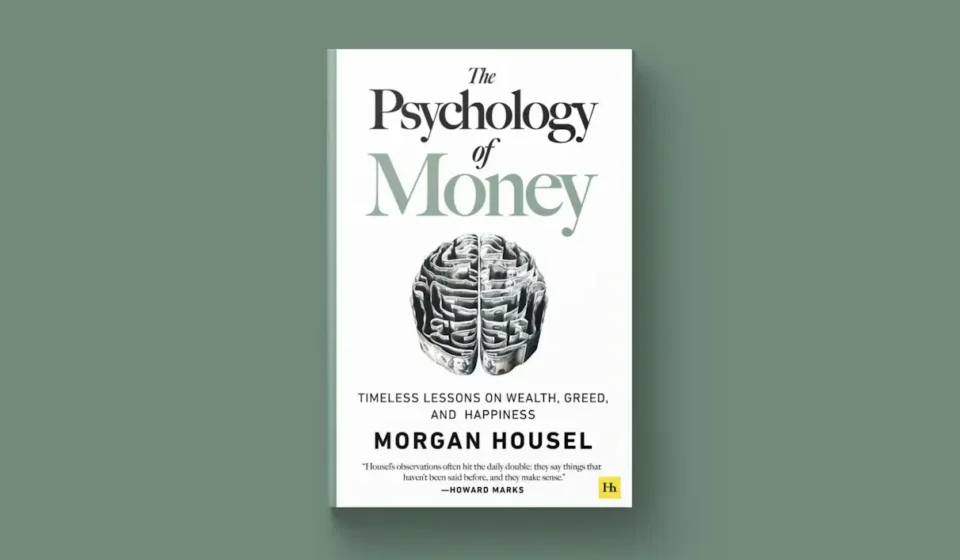
Most personal finance advice reads like an algebra textbook. We’re bombarded with index fund percentages, compounding calculators, and rigid budget spreadsheets that treat us like cold, logical algorithms. But Morgan Housel’s bestselling book completely flips the script, which is why this The Psychology of Money review focuses on behavior rather than math. Housel drops a truth bomb that most financial gurus dodge: doing well with money isn’t about what you know, it’s about how you behave.
Should You Read It?
Absolutely, if you’re antrying to get your money situation together. Whether you’re fresh out of college with your first job, in your 30s or 40s grinding through a career, or getting close to retirement, this book will change how you think about money. It’s short, around 250 pages, and written in plain English no finance degree needed.
In today’s economy with inflation, market ups and downs, and constant financial noise, Housel’s advice feels practical and calming. It helped me feel more in control instead of stressed out.

Recommended Books on Understanding Your Relationship with Money
When you strip away the math and spreadsheets, personal finance is really just a mind game. If you want a deeper look into why you spend, save, or stress over cash, there is one book that sits at the top of every recommendation list.
This is the ultimate guide to understanding financial behavior. Morgan Housel explains that doing well with money isn’t necessarily about what you know. It’s about how you behave. The book shares 20 short stories exploring the flaws, biases, and emotional triggers that drive human financial choices.
- Key Lesson: Managing money is 80% behavior and only 20% head knowledge.
Cold Math vs. Real Life Behavior
The book is structured into 19 short, fast-paced chapters that explore the weird irrational ways humans interact with wealth. A central theme in this The Psychology of Money review is how ordinary people can outperform financial geniuses simply through emotional discipline. Housel contrasts brilliant Wall Street minds who went completely broke with a small-town janitor who quietly saved millions.
The standout takeaway for the modern reader? “Reasonable” beats “rational.”
A spreadsheet will tell you that paying off your mortgage early is a bad mathematical move if the stock market yields a higher return. But Housel argues that if eliminating a monthly debt helps you sleep like a baby at night, it’s the absolute right move. True wealth isn’t about maximizing every single decimal point; it’s about buying your independence and peace of mind.
Three Takeaways From This The Psychology of Money book Review
- The Seduction of Compounding: Wealth isn’t built by timing the market perfectly. Warren Buffett is a billionaire because he started investing as a kid and simply never stopped. Time does the heavy lifting, not complex trading strategies.
- Getting Wealthy vs. Staying Wealthy: Making money requires taking risks and being optimistic. Staying wealthy requires the exact opposite: humility, a little bit of paranoia, and accepting that good luck played a massive role in your success.
- The “Room for Error” Buffer: The most critical part of any financial plan is planning on your plan not going according to plan. Keeping a pile of cash that earns next to nothing isn’t inefficient; it’s the insurance policy that keeps you from selling your stocks at a loss when life hits the fan.
The Amazon deal right now
The paperback is sitting at just $7.49 on Amazon (originally listed around $19.99). Pretty good discount for something this useful. The Kindle version is usually cheaper too, and the psychology of money audio book works great if you listen while driving or working out.
Grab it here: The Psychology of Money on Amazon
Why Add AI to the Conversation?
Here’s something fresh: As artificial intelligence continues to reshape jobs, investing, and even personal finance apps, Housel’s core message becomes even more important. AI tools can analyze markets, suggest budgets, or automate investing — but they can’t fix emotional decisions like panic-selling during a crash or overspending when you get a bonus.
In this new AI-driven economy, understanding the psychology behind money will separate those who build real wealth from those who get left behind. The book helps you stay grounded while technology changes the finance game around you.

Where This Book Ranks: The Top 10 Personal Finance Books of All Time
To put this The Psychology of Money review into perspective, it helps to see how Morgan Housel’s philosophy stacks up against the absolute heavyweights of the wealth-building world. Whether you are looking to destroy debt, automate your investments, or shift your mindset, these are the top 10 personal finance books you should add to your reading list today:
1. The Psychology of Money by Morgan Housel
- Core Focus: Behavioral finance, mindset, and risk management.
- Why read it: As emphasized throughout this The Psychology of Money review, doing well with money is less about cold math and far more about your daily behavior and emotional control.
2. I Will Teach You to Be Rich by Ramit Sethi
- Core Focus: Automation, banking, and conscious spending.
- Why read it: This is the ultimate, no-guilt guide for millennials and Gen Z. It provides a tactical 6-week program to automate your bills, maximize your credit card points, and spend aggressively on what you love while cutting costs ruthlessly on what you don’t.
3. The Simple Path to Wealth by J.L. Collins
- Core Focus: Index fund investing and low-stress financial independence.
- Why read it: Born out of letters the author wrote to his daughter, this book strips away the unnecessary complexity of Wall Street. It advocates a simple, ultra-effective strategy: put your money into low-cost broad-market index funds (like VTSAX) and let the stock market build your freedom for you.
4. Rich Dad Poor Dad by Robert Kiyosaki
- Core Focus: Financial literacy and shifting from employee to asset owner.
- Why read it: A legendary classic that completely redefines what an “asset” is. Kiyosaki details the stark difference in mindset between working for a paycheck and making your money work for you through cash-flowing real estate and business investments.
5. The Total Money Makeover by Dave Ramsey
- Core Focus: Extreme debt elimination and behavioral cash budgeting.
- Why read it: If you are drowning in credit card debt or student loans, this is your emergency playbook. Ramsey’s strict “Baby Steps” and famous “Debt Snowball” method focus heavily on psychological wins rather than pure mathematics to get you back to zero.
6. The Millionaire Next Door by Thomas J. Stanley & William D. Danko
- Core Focus: The actual habits and data behind America’s wealthy.
- Why read it: This book shatters the myth that wealthy people drive sports cars and wear designer clothes. Backed by decades of research, the authors reveal that most self-made millionaires live quietly, budget strictly, and prioritize financial security over flashy status symbols.
7. Die with Zero by Bill Perkins
- Core Focus: Optimizing your lifespan for memory capital over hoarding cash.
- Why read it: The perfect counter-balance to aggressive penny-pinching. Perkins challenges readers to rethink the standard retirement timeline, arguing that you should optimize your spending across your peak health years to live a rich life full of experiences, rather than dying with a massive bank balance.
8. Your Money or Your Life by Vicki Robin & Joe Dominguez
- Core Focus: Transforming your relationship with material things and time.
- Why read it: This book introduces a profound concept: money is something you trade your precious life energy for. By mapping out exactly how many hours of your life a purchase costs, it naturally drives down your consumerism and accelerates your journey to financial freedom.
9. The Richest Man in Babylon by George S. Clason
- Core Focus: Timeless financial principles told through ancient parables.
- Why read it: Don’t let the old-school storytelling fool you; the rules laid out in this classic like “pay yourself first” (saving 10% of everything you earn) and “guard thy treasures from loss” remain the absolute foundations of modern wealth generation.
10. The Intelligent Investor by Benjamin Graham
- Core Focus: Value investing and protecting your portfolio from market mania.
- Why read it: Widely praised by Warren Buffett as the best book on investing ever written. It is a dense, analytical read, but it teaches you the essential discipline of “value investing” and how to treat market fluctuations as opportunities rather than terrifying disasters.
FAQ
Is this book good for beginners in finance? Yes, absolutely. It’s written in plain, everyday language and doesn’t assume you already know complicated economic terms. Great starting point if you’re new to money management.
Does it give specific investment advice? Not really. Instead of telling you exactly what stocks to buy, it teaches you the mindset and behaviors that lead to better financial decisions over the long run.
How does it relate to the current US economy? Very well. It talks about inflation, market volatility, and why people make emotional choices during uncertain times — all things many Americans are facing right now with high living costs and economic uncertainty.
Is the book worth buying in 2026? 100%. The lessons are timeless. Even with AI changing finance and the economy evolving, human psychology around money stays the same.
How long does it take to read? Most people finish it in a few days since the chapters are short and engaging. You can easily read one or two chapters during your commute or before bed.
If you care about building real financial stability in this crazy economy, pick this up. You won’t regret it.